Detail
Nematodes show how lack of food shapes the next generation

Alumni UniBE Corporate
10/04/2026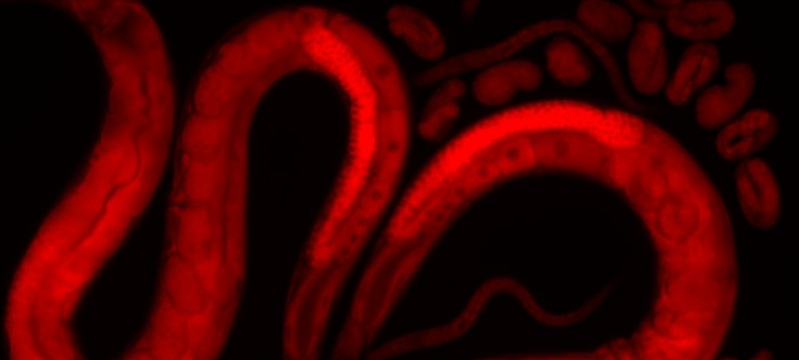
How do environmental conditions affect generations? Researchers at the University of Bern investigated this question in a study on the nematode. The nematode is a model organism that is frequently used in research because it is a good model for studying fundamental biological processes.
The study shows that if nematode mothers receive too little food, they give their offspring fewer ribosomes - the "protein factories" of the cells.
As a result, the offspring start life with fewer "protein factories", produce fewer proteins required for growth and therefore initially grow more slowly. Later stages of development are therefore achieved with a delay. The number of ribosomes that mothers pass on to their offspring can therefore significantly influence their development and survival success.